



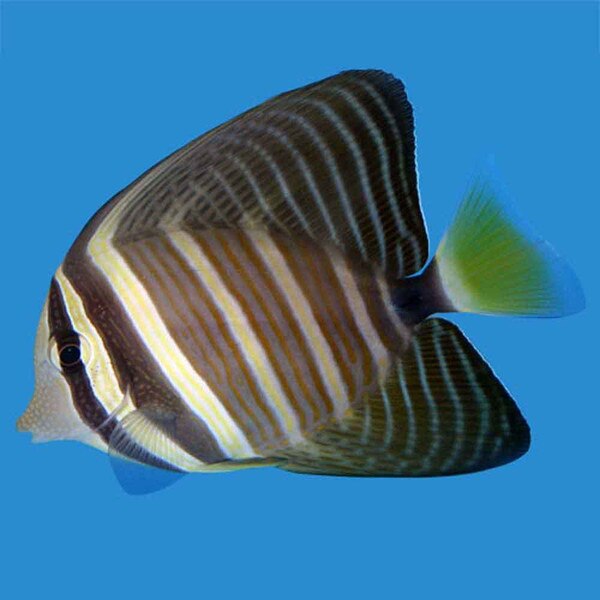
Sailfin Tang - Zebrasoma veliferum - Small
Shop in Retail Store
RETAIL STORE ONLY, not available for shipping. Call to confirm availability and price.
Details
The Sailfin Tang (Zebrasoma veliferum**) has brown, white and orange vertical stripes throughout its body and its large dorsal and anal fins. The tail is yellow in young fish but darkens with ages and becomes striped in fish from some regions. Found throughout the Pacific Ocean and Mozambique in the Indian Ocean, this fish is very similar to the Red Sea Sailfin Tang (Z. desjardinii) which is from the Red Sea and a larger area i nthe Indian Ocean. Z. desjardinii has spotted fins and a spotted tail while Z. veliferum has a more strongly striped coloration.
Tangs and Surgeonfish are some of the most popular and common fish found in the aquarium trade. This group includes several genuses that can be associated with the various common name groups although "Surgeonfish" and "Tang" are often used interchangeably: Acanthurus ("Surgeonfish"), Naso ("Unicorn Tangs"), Ctenochaetus ("Bristletooth Tangs") and Zebrasoma ("Tangs"). They are found in almost every tropical oceans and in almost every color and pattern. The common names "surgeonfish" or "doctorfish" comes from the tiny scalpel-like spine at the base of the fish's tail. They use this spine as defense and will extend the spine if threatened. You may witness the tang shimmying up against another tang or fish; this is a sign of aggression as they may be using this spine to ward off the other fish. Always use caution when handling or netting a tang since this spine can become caught or cause injuries.
Tangs and Surgeonfish are omnivores but a large part of the diet of most species consists of algae and plant matter. Tangs should also be given some meaty food to round out their diet. However, tangs that are fed primarily meaty foods over a long period of time are more likely to suffer from head and lateral line erosion (HLLE). HLLE disease in the short run is not fatal, but over time if the disease continues to progress the fish will stop eating and become lethargic and susceptible to other infections which may eventually contribute to its demise. The best treatment is prevention; maintain excellent water quality and feed a rich and varied diet. Supplementing with a multivitamin (A, D, E, B complex, and Iodine) may also help prevent further erosion.
Tangs are generally community fish and get along with most other tankmates. Most do not bother corals and can actually help keep nuisance algae trimmed and under control, especially "Bristletooth Tangs" from the Ctenochaetus genus. Tangs may get territorial and aggressive towards similar tangs, so always use caution when keeping these fish together or with other fish that have a similar body shape or coloration.
Visit That Fish Blog for more information on Tangs and Surgeonfish and other aquarium-related topics from our marine biologists and aquatic staff.
**This fish is classified as Zebrasoma velifer in some references, though it is more widely and commonly known as Zebrasoma veliferum.
Specifications
| Specifications | |
| MPN | 724-SAILFINTANG |
| Manufacturer | That Fish Place |
| Common Name | Sailfin Tang - Small |
| Scientific Name | Zebrasoma veliferum |
| Difficulty | Easy |
| Reef Safe | Yes |
| Invert Safe | Yes |
| Community Safe | Yes |
| Max Size (in inches) | 15 |
| Min Tank Size (in gallons) | 120 |
| Origin | Indo-Pacific |
| Specific Gravity Range | 1.020-1.024 |
| pH Range | 8.0-8.4 |
| Diet | Omnivore |
| Temperature Range | 75-82 |
| Internal Id | 29735 |
| State Restrictions |
| Alaska |
| Armed Forces Americas |
| Armed Forces Europe |
| Armed Forces Pacific |
| California |
| Hawaii |
| Puerto Rico |